Rain clouds in this part of the world get trapped between hilltops and empty themselves in an almost biblical manner. The showers can last all afternoon, filling creeks and washing earth down onto the roads. Drenched trees bend from the weight. The air is rich, and thick.
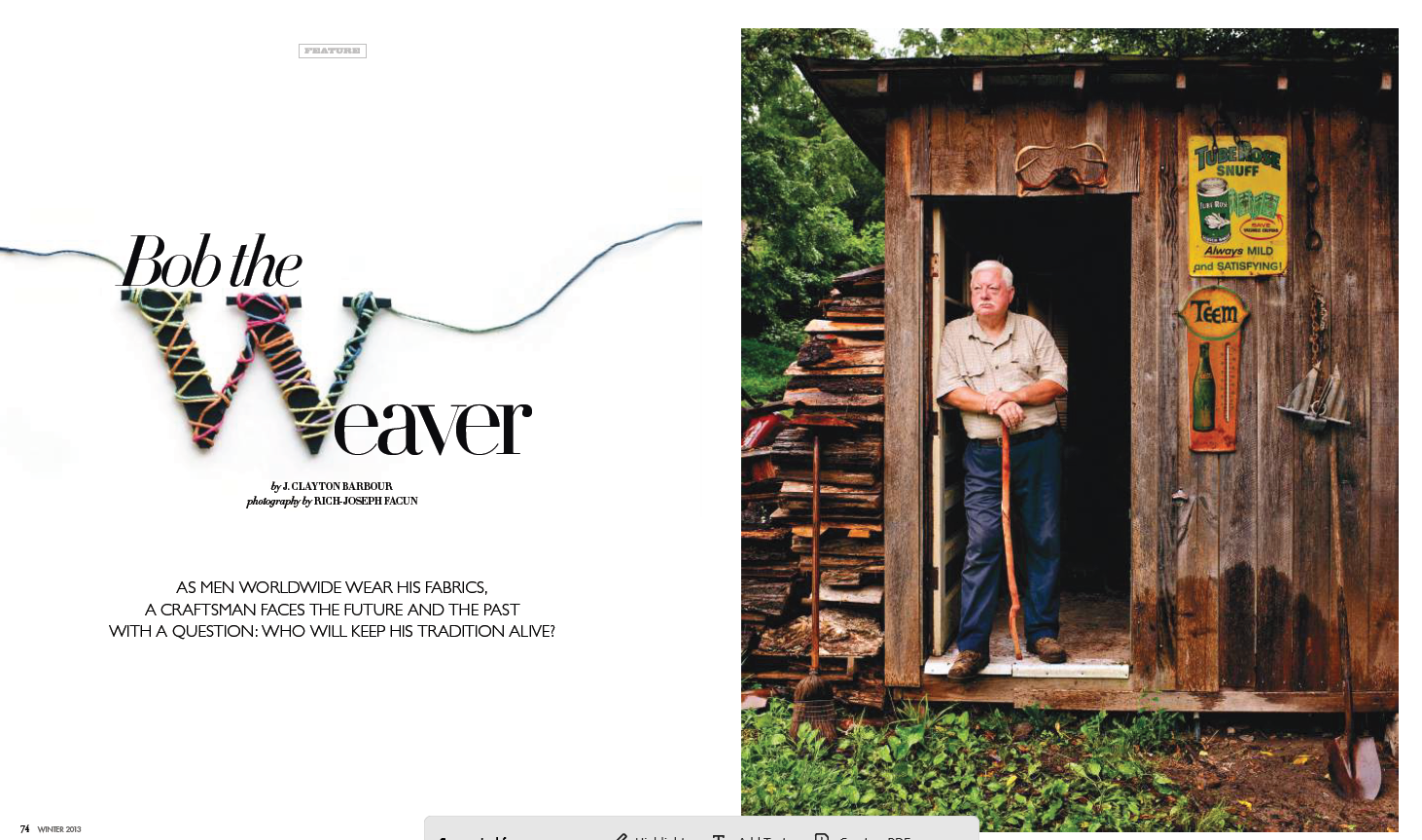
Here, such weather is seen as more a respite than an inconvenience, a chance to appreciate simple things like the company of friends, or the patter of rain on a tin roof. The gray-haired man muses out loud about this. The antique table in front of him looks strong enough to support an engine block but holds only a half-eaten rum cake and five jars of chilled moonshine.
He wears a tan shirt, unbuttoned enough to show the scar on his breastbone, a jagged reminder of recent open-heart surgery. Bell’s palsy causes him to speak from the corner of his mouth, but his words are clear and his voice strong. He smiles as I slide my phone across the table and press record.
— Distinction magazine, WINTER 2013
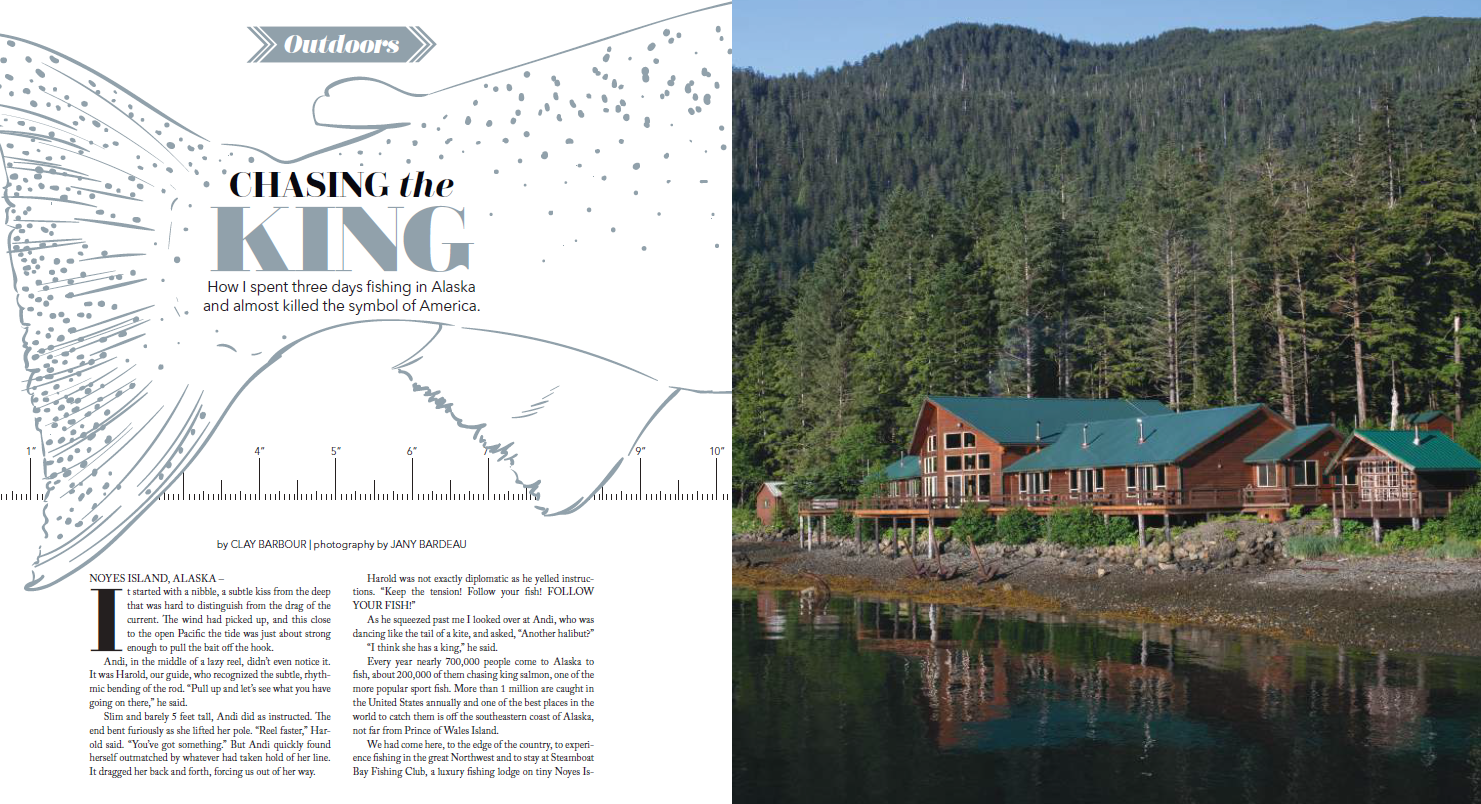
It started with a nibble, a subtle kiss from the deep that was hard to distinguish from the drag of the current. The wind had picked up, and this close to the open Pacific the tide was just about strong enough to pull the bait off the hook.
Andi, in the middle of a lazy reel, didn’t even notice it. It was Harold, our guide, who recognized the subtle, rhythmic bending of the rod. “Pull up and let’s see what you have going on there,” he said.
Slim and barely 5 feet tall, Andi did as instructed. The end bent furiously as she lifted her pole. “Reel faster,” Harold said. “You’ve got something.” But Andi quickly found herself outmatched by whatever had taken hold of her line. It dragged her back and forth, forcing us out of her way. Harold was not exactly diplomatic as he yelled instructions.
“Keep the tension! Follow your fish! FOLLOW YOUR FISH!”
As he squeezed past me I looked over at Andi, who was dancing like the tail of a kite, and asked, “Another halibut?”
“I think she has a king,” he said.
— Distinction magazine, FEB / MARCH 2019
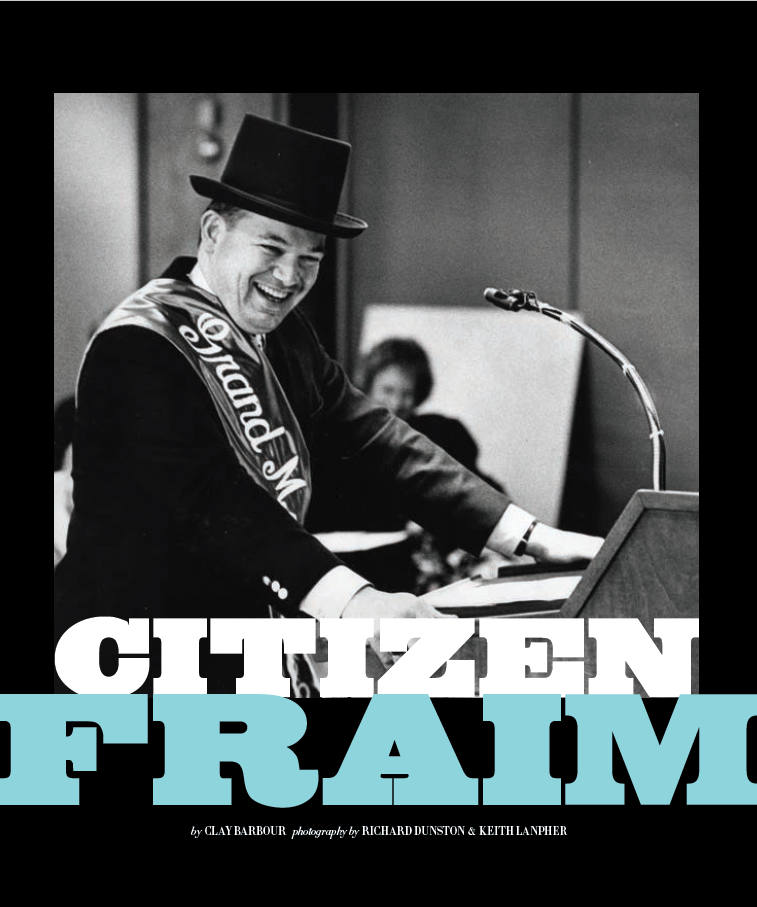
John F. Kennedy arrived in Norfolk on Nov. 4, 1960, four days before his history victory over Richard Nixon. He traveled by motorcade in a red convertible to Granby High School, where 12,000 supporters awaited him, the biggest political rally the city had ever seen.
The nuns at Blessed Sacrament Catholic School, understanding the significance of an Irish, Catholic presidential contender, bused their students to Granby for the event.
One was Paul Fraim, 10 years old, a fifth-grader. He still smiles when he recalls climbing atop the baseball field backstop to get a better view. “You could see him in the distance,” he says. “It was exciting, the kind of thing that makes an impression on you.”
The young, charismatic president did have a big impact on Fraim. Kennedy’s advocacy of volunteering and public service in many ways provided an early blueprint for the man who would go on to be one of Norfolk’s best, and most influential, politicians.
In July, Fraim left office after serving 30 years on the City Council, 22 of those as mayor. He led with a calm, quiet hand, preferring deal making to knuckle breaking, pragmatism to idealism.
He had his detractors. Poverty is still a problem, and so are the schools. He was never the most open leader, preferring instead to work deals out behind closed doors. But few ever questioned Fraim’s work ethic, or his passion for the city and its people.
— Distinction, FALL 2016
The Old Fashioned as we know it – made with whiskey – was invented sometime in the 1800s, reportedly in Louisville, Kentucky, which only makes sense: Bourbon is religion there. The recipe was deceptively simple – sugar cube, two dashes of bitters, an orange peel and 2 ounces of rye or bourbon.
But when Prohibition lowered the quality of available hooch, bartenders started adding things to mask the spirit. Cherry juice. Soda water. Probably a rusty nail.
The problem is, despite the dramatic return of good whiskey, some of these awful Old Fashioned recipes remain. Order one in Wisconsin and it might include half an orange and some 7-Up. But those people eat raw beef at Christmas and wear sweatshirts to church, so just say “Bless their hearts” and keep them away from your whiskey.
Breaking Bad
FASHION |
Let me paint a scene for you. A man walks into a party dressed in a new suit. He has spent quite a bit of money on it and is clearly proud. But despite its fine cut and expensive material, you cannot take your eyes off the mountain of fabric gathered at his feet.
This is what’s known as a full break, or what I like to call the “yeah, whatever” cut – as in, when the tailor asks if I want a full break, I look away from my phone long enough to say, “Yeah, whatever.”
Women have long understood the importance of details when it comes to fashion. Men? Let’s just say I have seen enough male co-workers with worn belts and cheap, beaten-up shoes to know that we often ignore them.
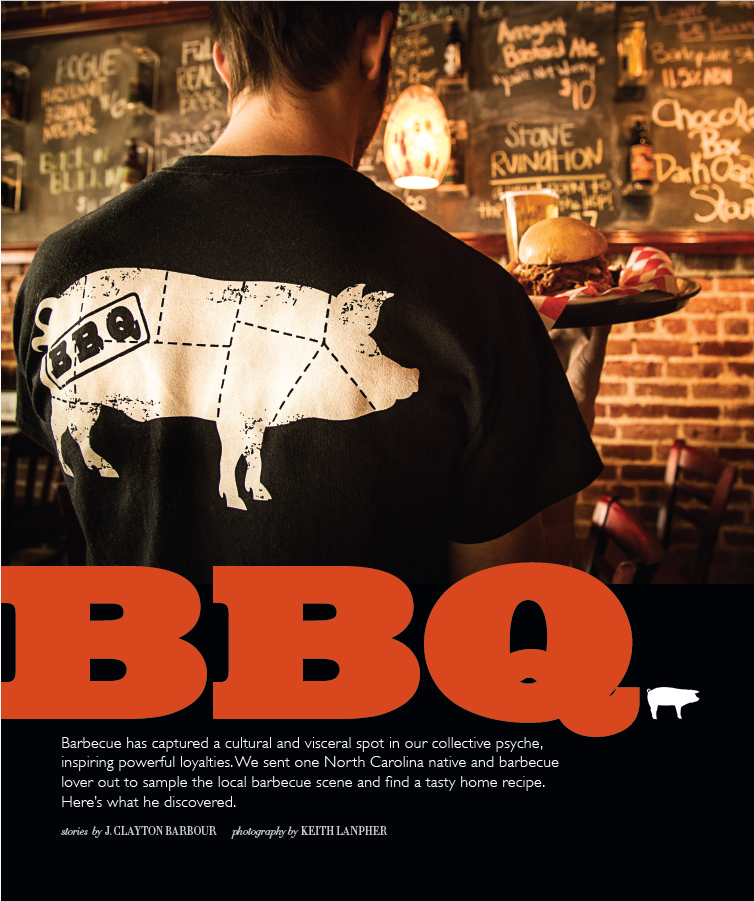
It’s not something you do; it’s something you eat. And that “something,” in most of the country, is slow-cooked, finely seasoned, pork. Pulled pork, preferably, though minced will do.
Few dishes in American fare generate the kind of loyalty – some would say obsession – that barbecue does. And fittingly, few cause such heated debate over styles. Chili, perhaps, in the West. Fried chicken and collards in the South. But those dishes tend to be cook-specific. I’ve seen more than one family reunion devolve into a fight over a collard recipe.
— Distinction magazine, SUMMER 2013
Old Fashioned Standards
FOOD |
The Omni Homestead
TRAVEL |
The drive into the heart of Bath County on Route 220 can feel a bit like dropping out of the clouds into paradise. The clean air. The lush forests. The absence of development.
Tucked cozily into a valley of the Allegheny Mountains, Bath is about 90 percent unspoiled nature, most of which belongs to the George Washington National Forest. There are no stoplights, no chain restaurants, and only one grocery store.
But what is here — natural springs and world-class hospitality — has been attracting tourists to this corner of Virginia since before Bath was a county and America was an independent country.